Adding weight to a spear or javelin for Herja
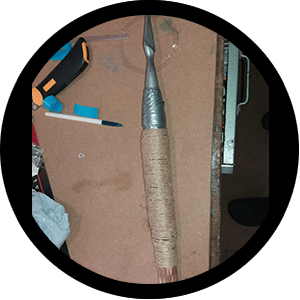
Materials required
- A spear with a blunt
- string
- ballast
- white glue or wood glue
- scotch tape in the colour of the blunt (optional)
1/ Adding weight
Since 2021, a spear, whatever its purpose, must weigh at least 900g. If your spear weighs less than this, you need to add weight to it to increase its weight.
This is the case for my 1m70 javelin. It weighs only 650g, so I have to compensate by 250g.
Warning! It is forbidden to place a counterweight on the heel of the spear. The ballast must always be as close as possible to the blunt.
There are plenty of ways to add the weight you need to your lance. For the time being, we're only offering one, but if you find any, don't hesitate to send them to us so we can add them here!
The only restriction, but not the least, on the method is that it must be safe for you and the other participants. There must be no sharp edges, points or other dangerous shapes.
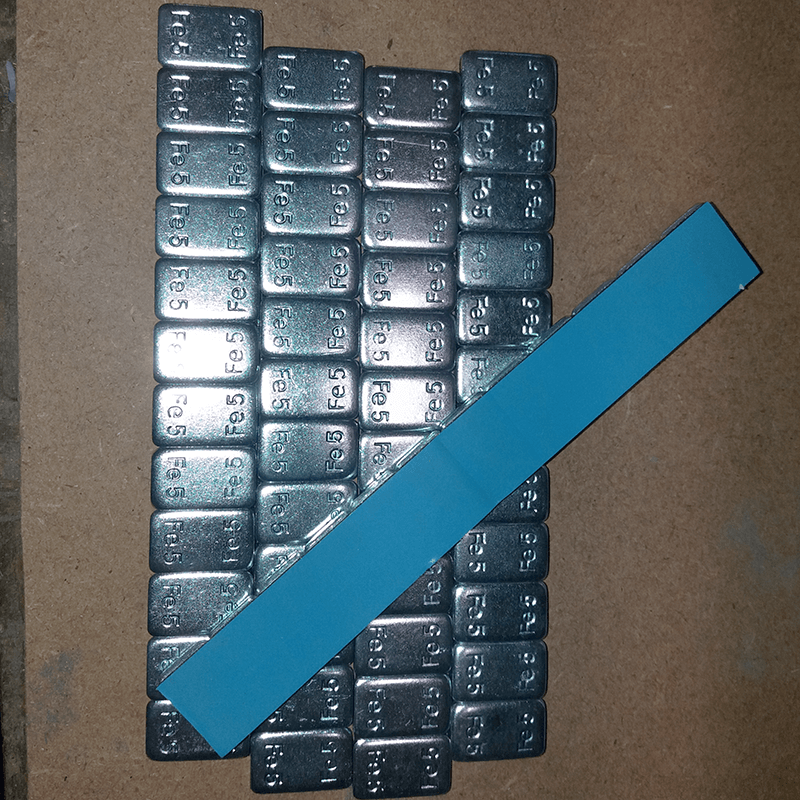
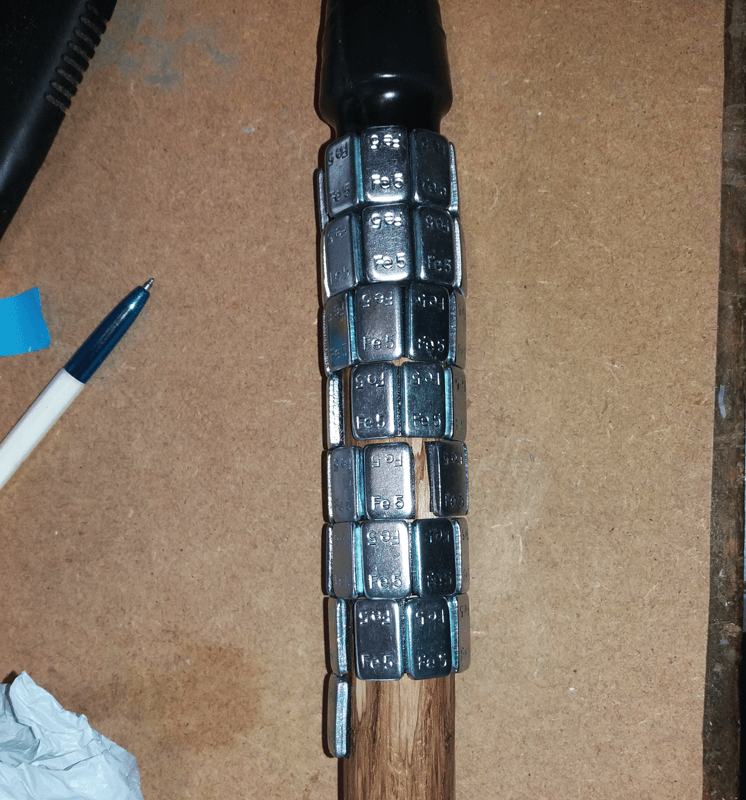
Here we've used car wheel balancing weights (example link to purchase below). What's practical is that each block is calibrated to 5g, so it's easy to calculate, and that it's made of iron, which is a relatively soft metal, but also because it's already mounted on double-sided tape.
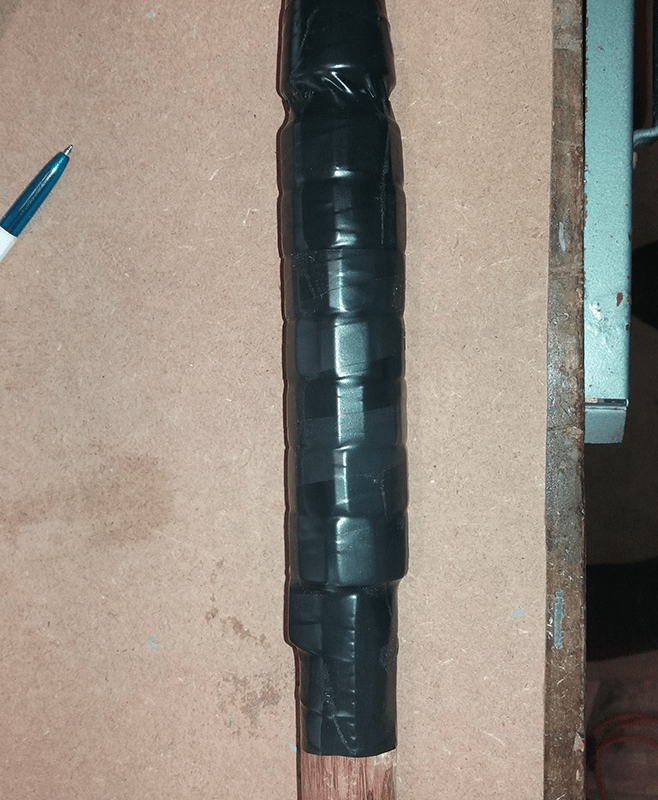
I chose to put on 300g of weight to have a small margin over the limit. Very easily, I glued them to the shaft, as close as possible to the blunt but leaving a small gap for finishing (next step). I then covered the whole thing with strong tape to hold it in place but also to make it a bit safer.
Here are some links to buy these weights:Put your spear back on the scales, and it should now weigh at least 900g, which is perfect for Herja.
2/ Finishing touches
Scotch tape, black in my case, is pretty average for a Viking spear. So there's an easy way to hide it all with string.
If, like me, your tape is not the same colour as the blunt, you can apply a layer of tape of the same colour to make it more even. In this case I forgot to do it before laying the string...
Next, take a spool of string. It shouldn't be too thin - avoid kitchen twine - or too thick - we said twine, not rope! Here I've used linen twine about 0.6mm in diameter, bought at Leroy Merlin.
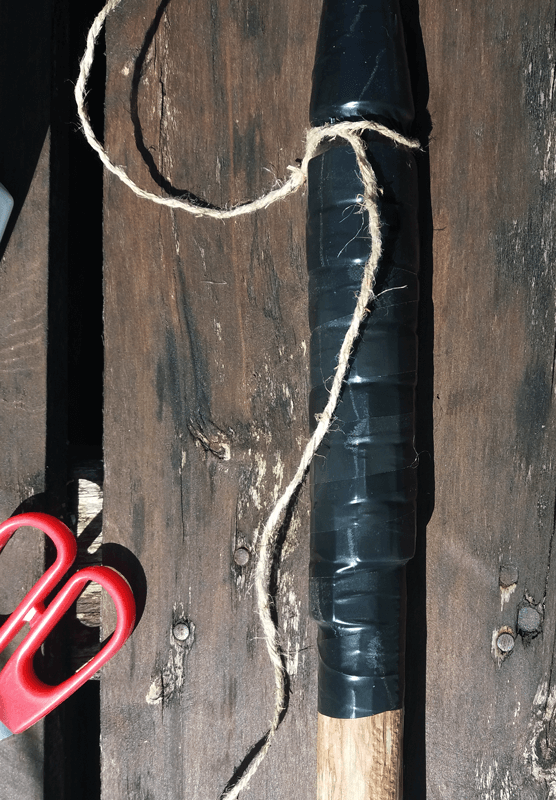
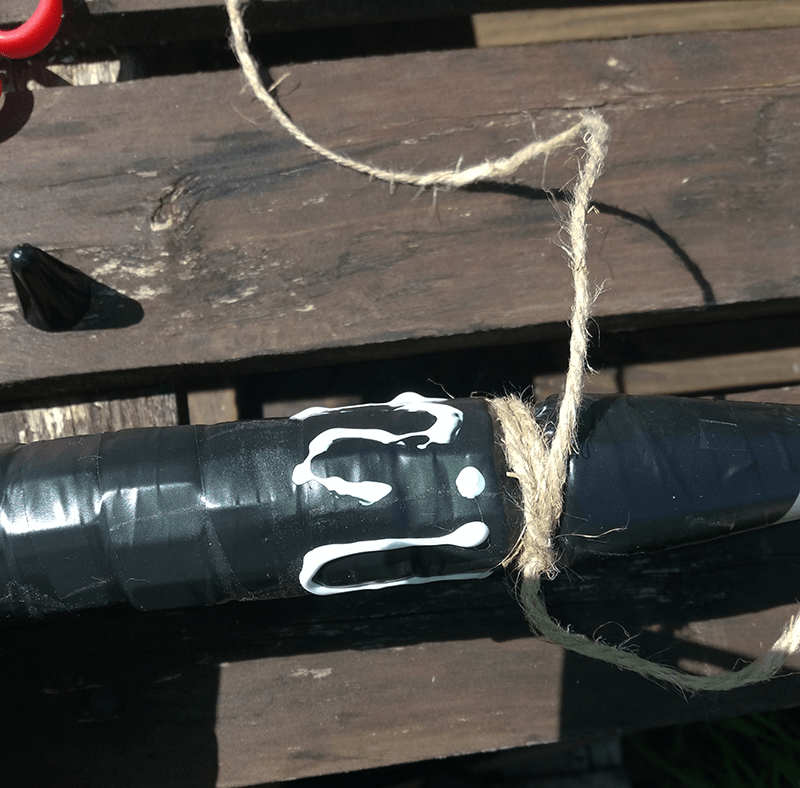
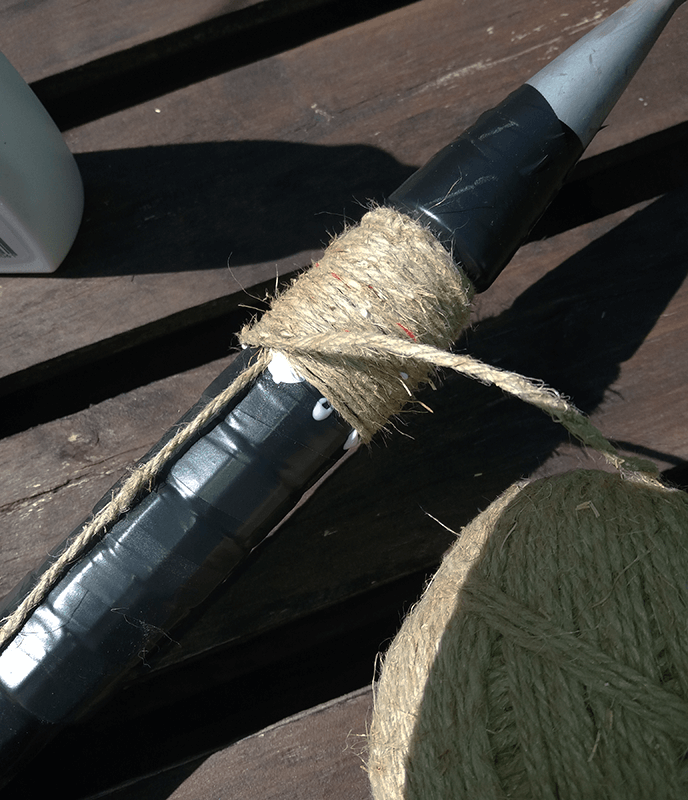
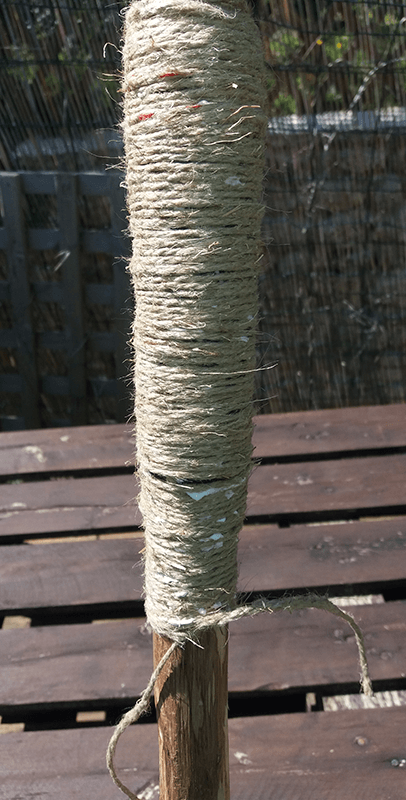
1/ Start by tying a knot as close as possible to the blunt, leaving a piece longer than the surface to be concealed.
2/ Put a little glue on a small area around the shaft, otherwise it will dry before it is laid.
3/ Wrap the string as tightly as possible around the ends.
4/ Repeat steps 2 and 3 until all the tape has been concealed.
5/ Finish by tying a knot with the end that protrudes from step 1 (which should be under your rope).
