Making a neck protector
Materials required
- thick foam
- your AMHE mask
- cutter
- scotch
- screw/nut
1/ Choice of foam
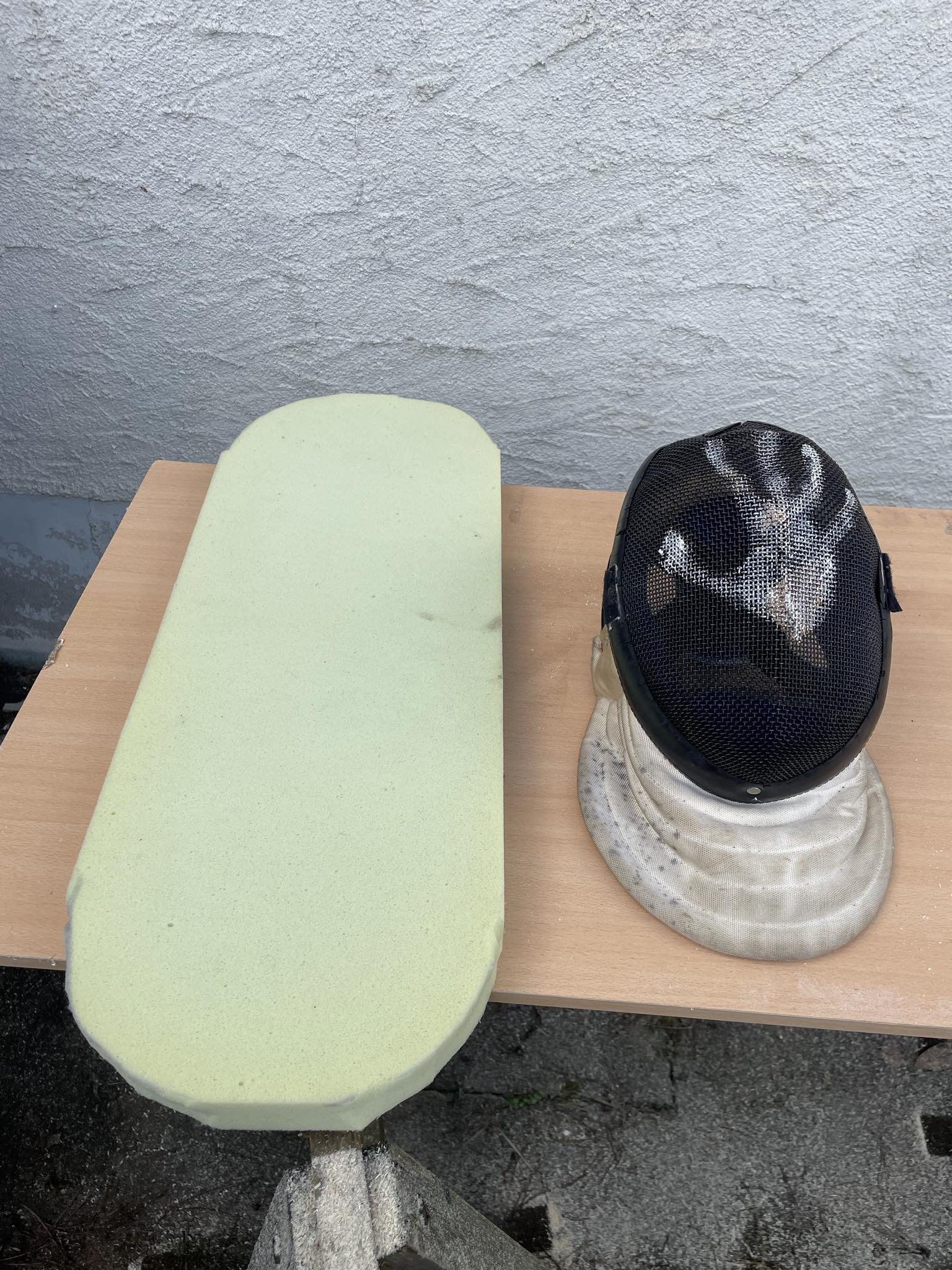
This is the very basis of your future neck protector, so you need to choose a quality one. You need thick foam to absorb the impact well, but also solid foam so that it doesn't quickly fall apart.
We offer a number of options and examples:
- thick foam, as shown here from an old baby mattress
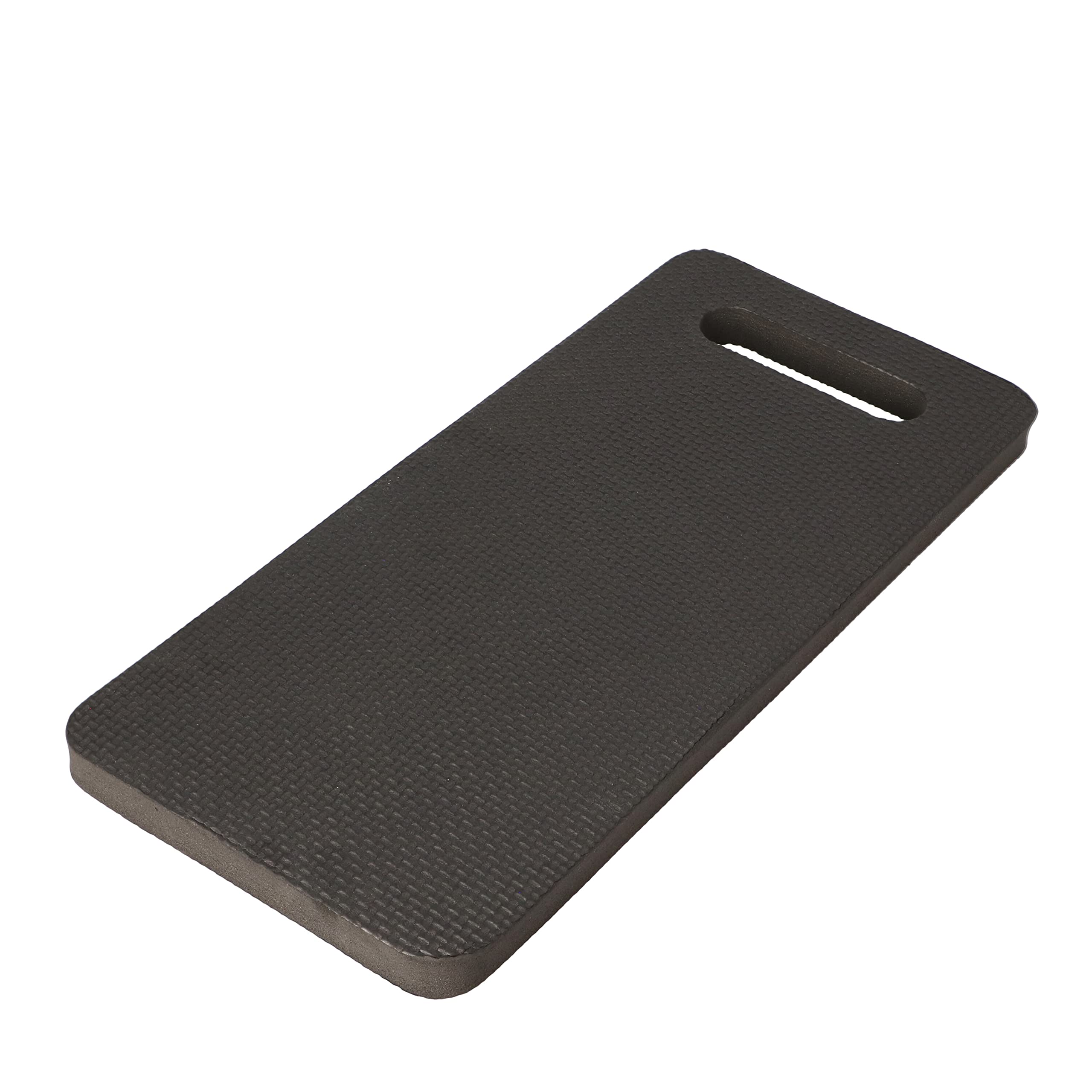
- a knee protector for DIY
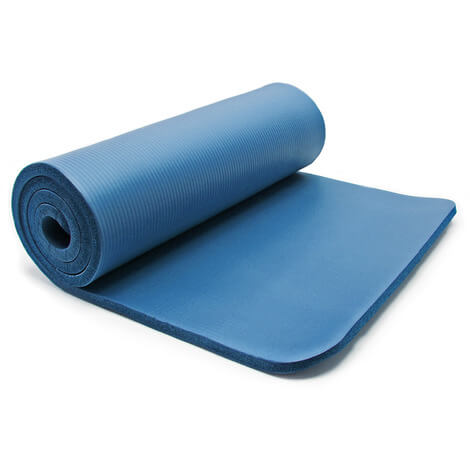
- a yoga mat, glued in several layers
Personnalemment, j'ai même utilisé de la plaque de mousse présente dans les gilet de sauvetage.
2/ Cutting the foam
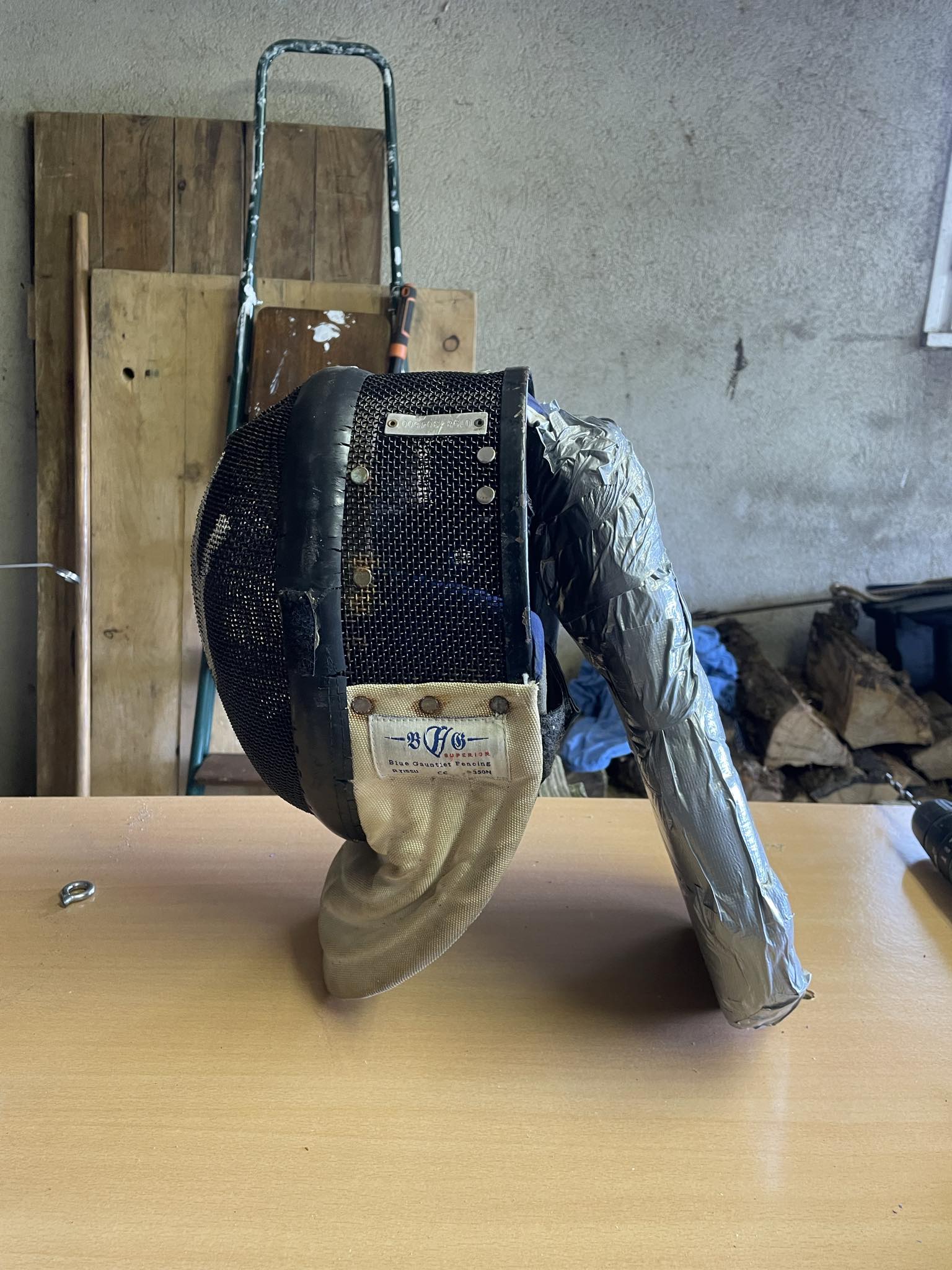
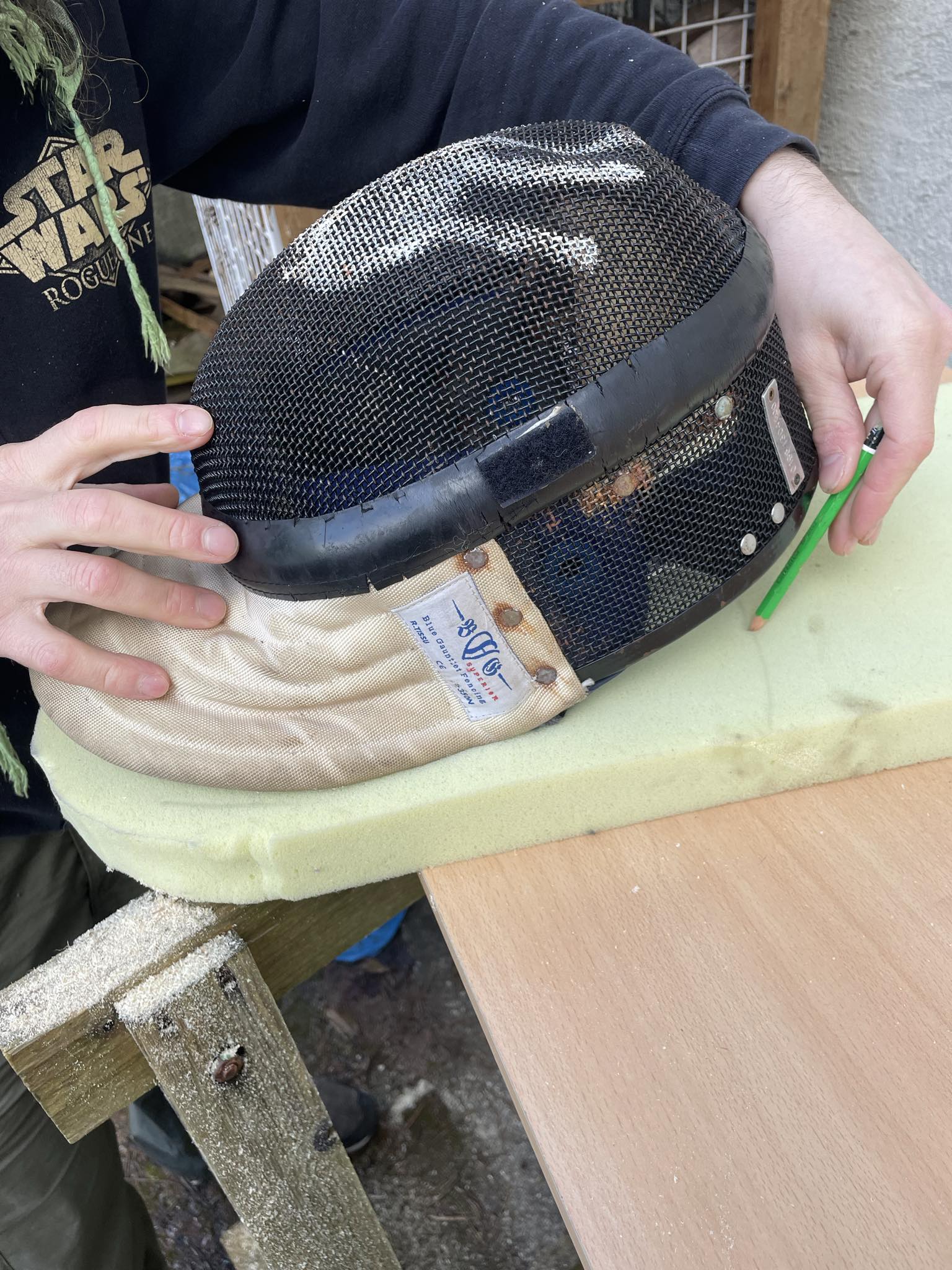
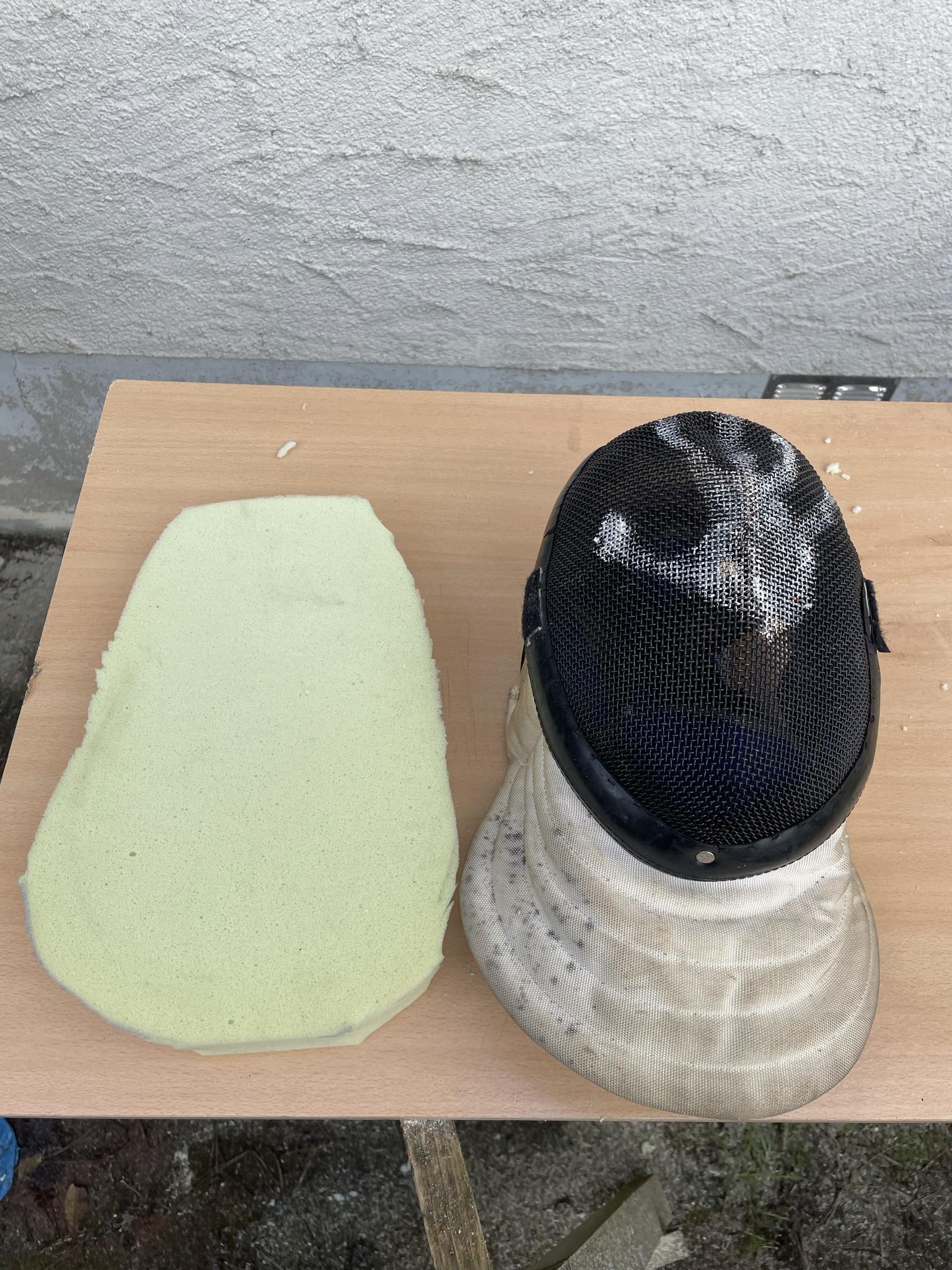
Step 2 is very simple: use your mask to outline the shape, mark it and then cut it out neatly using the cutter.
3/ Reinforcing foam
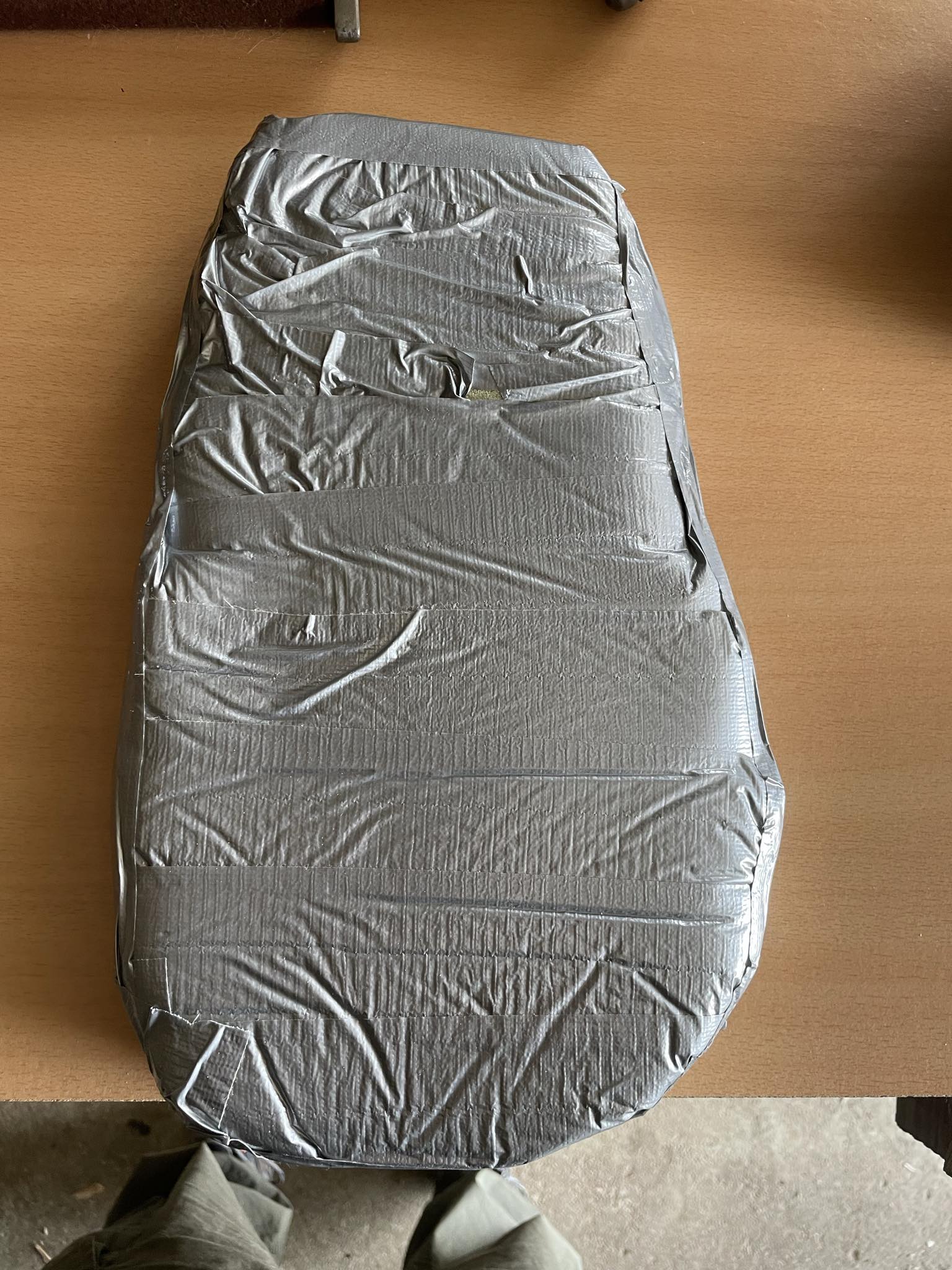
This is a very important step, as it will considerably increase the lifespan of your foam sheet by protecting it from impacts and maintaining its integrity after multiple blows.
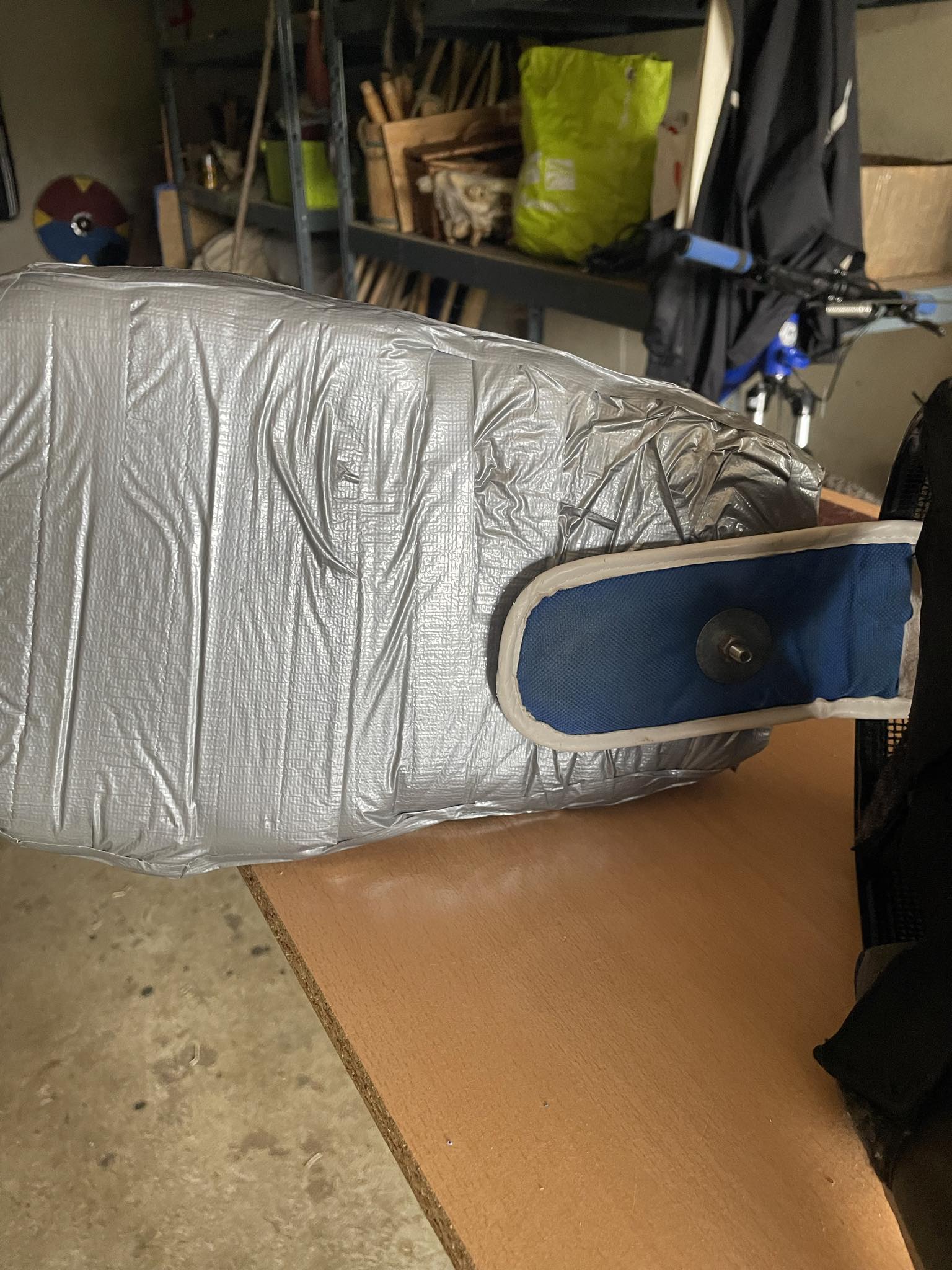
To do this, cover your foam neatly and, above all, completely and tightly with strong scotch tape.
4/ Attaching the foam to the mask
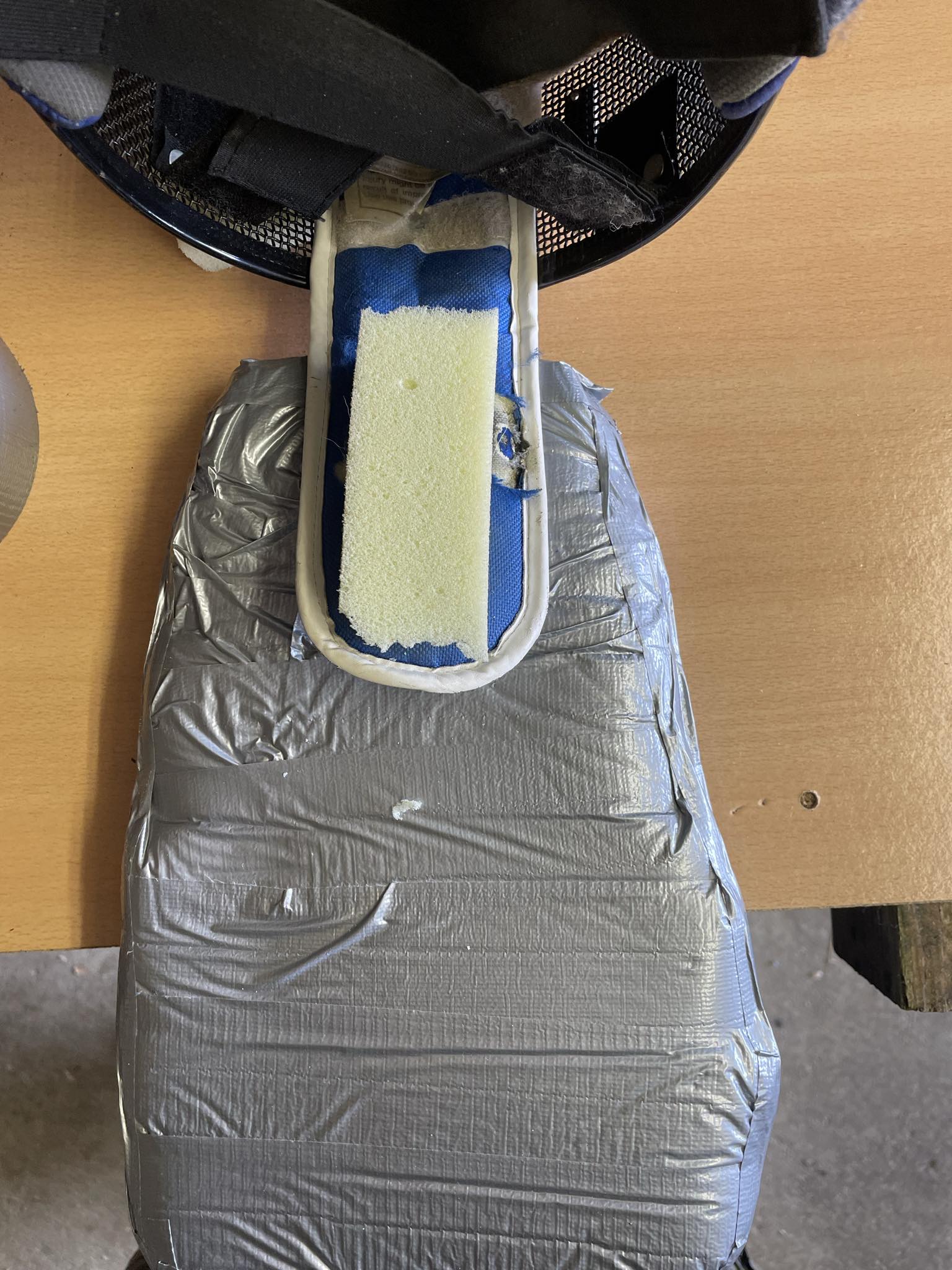
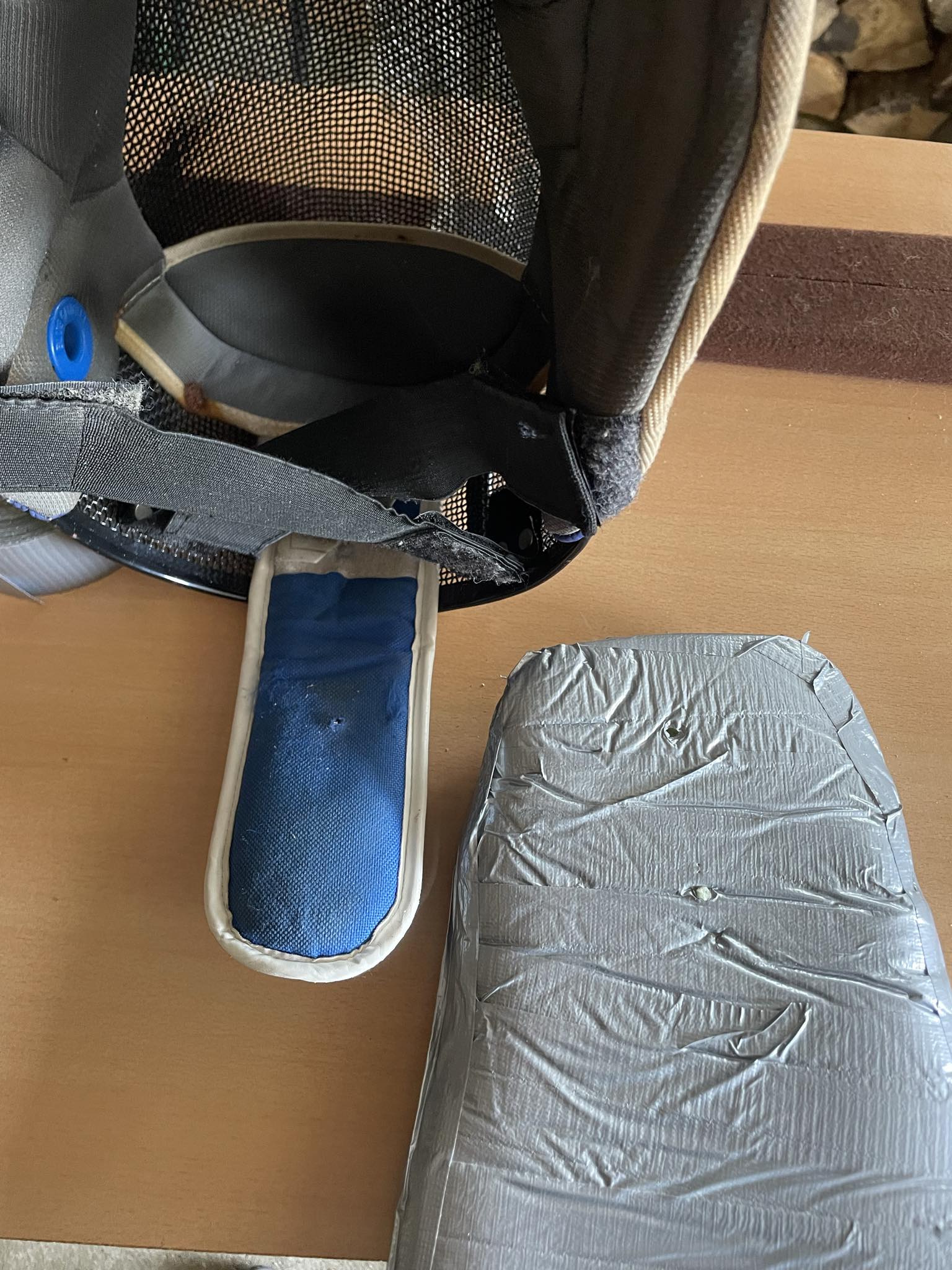
Start by drilling a hole in the foam plate and then in the tab of your mask. Make sure that the holes are aligned so that the neck protector is correctly positioned behind the head.
Then fix the foam to the tongue using the screw and nut (in our case an old hook). We also recommend, as in this case, that you put a washer on each side to sandwich the foam.
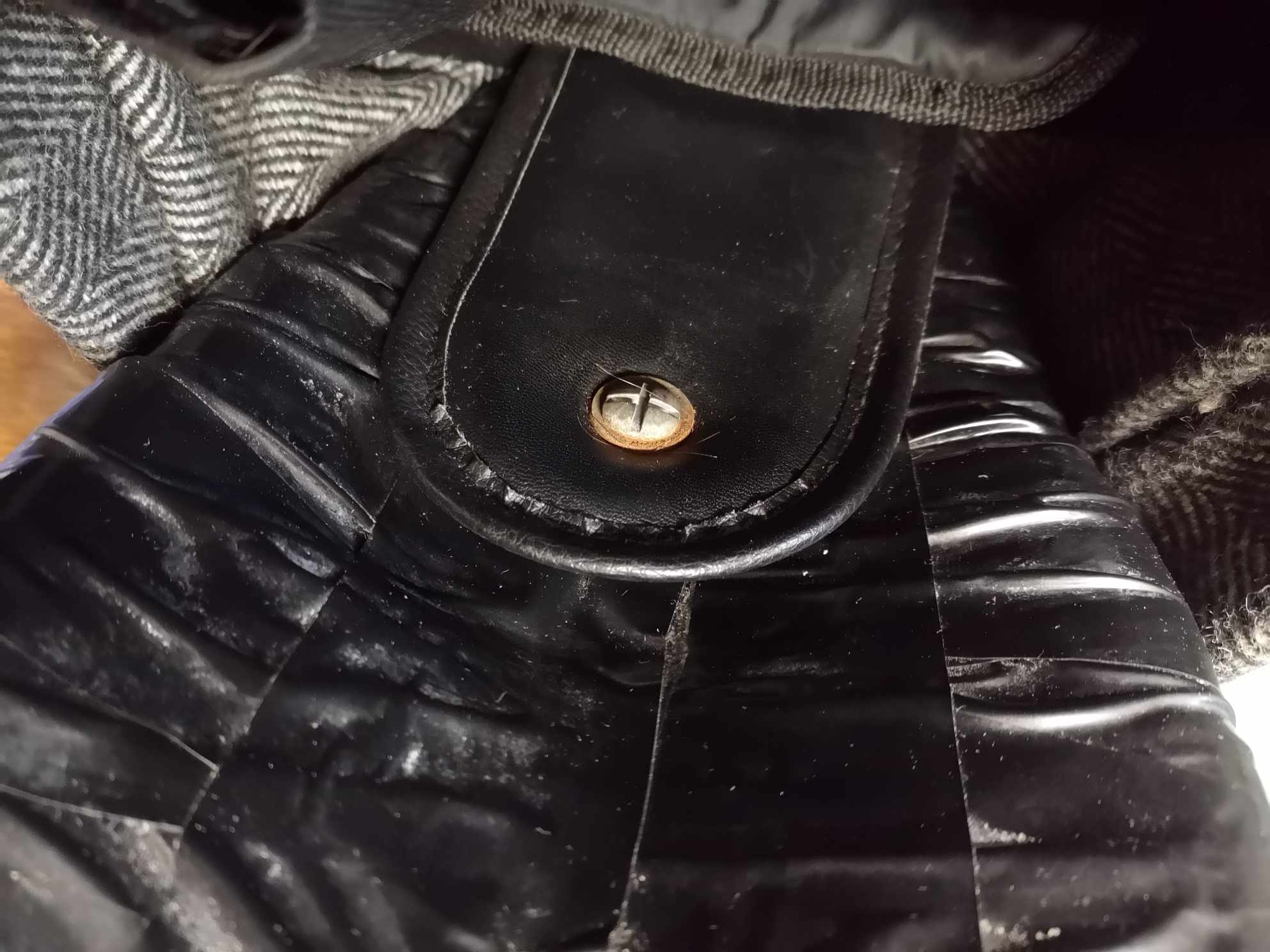
However, protruding metal parts can be dangerous to your head, so it's best to cut them to remove any sharp, protruding edges.
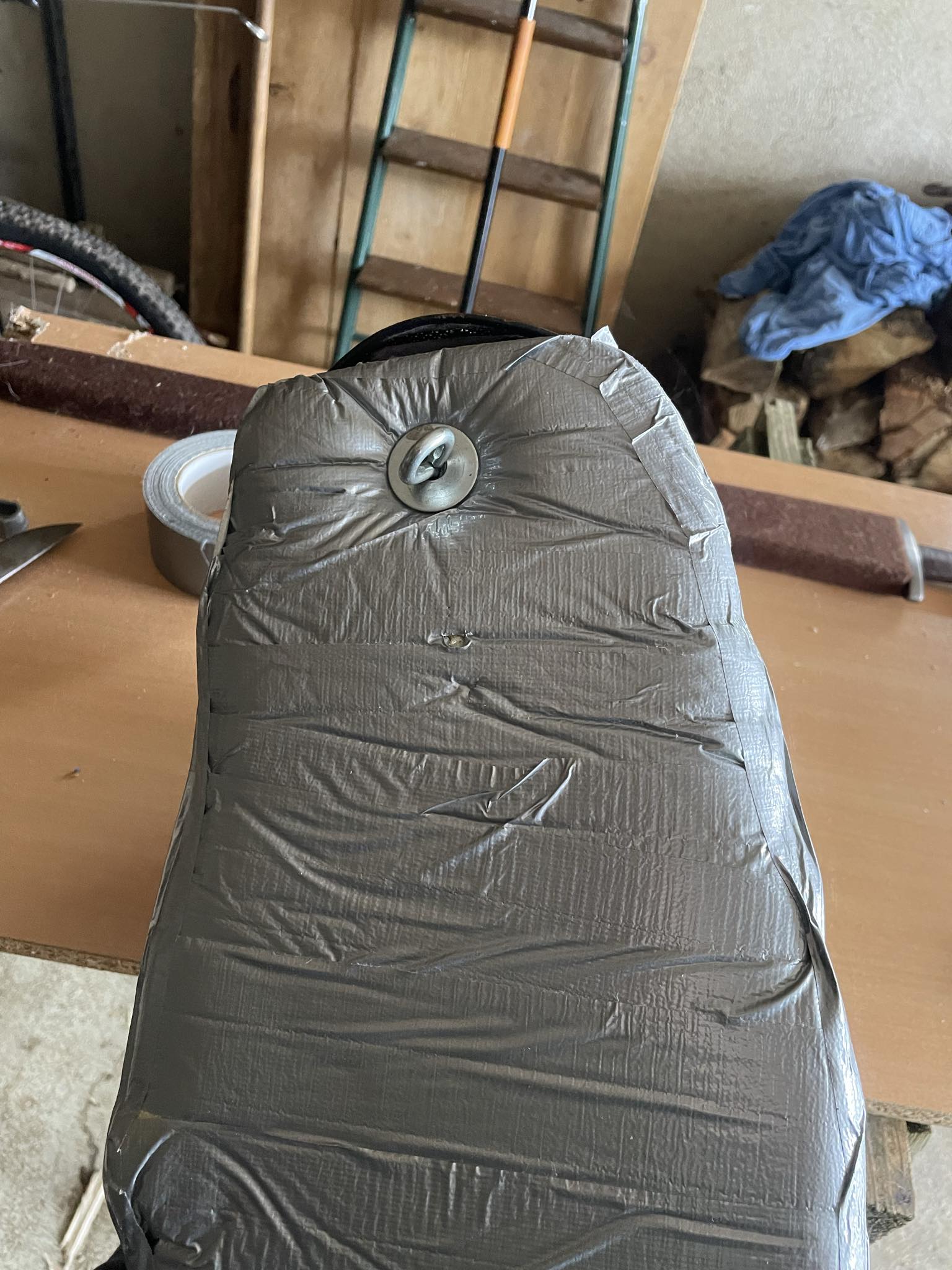
You also have other alternatives, such as using a large screw with a flat domed head, but placed on the head side in the opposite way to the example above, which is less dangerous for your head.
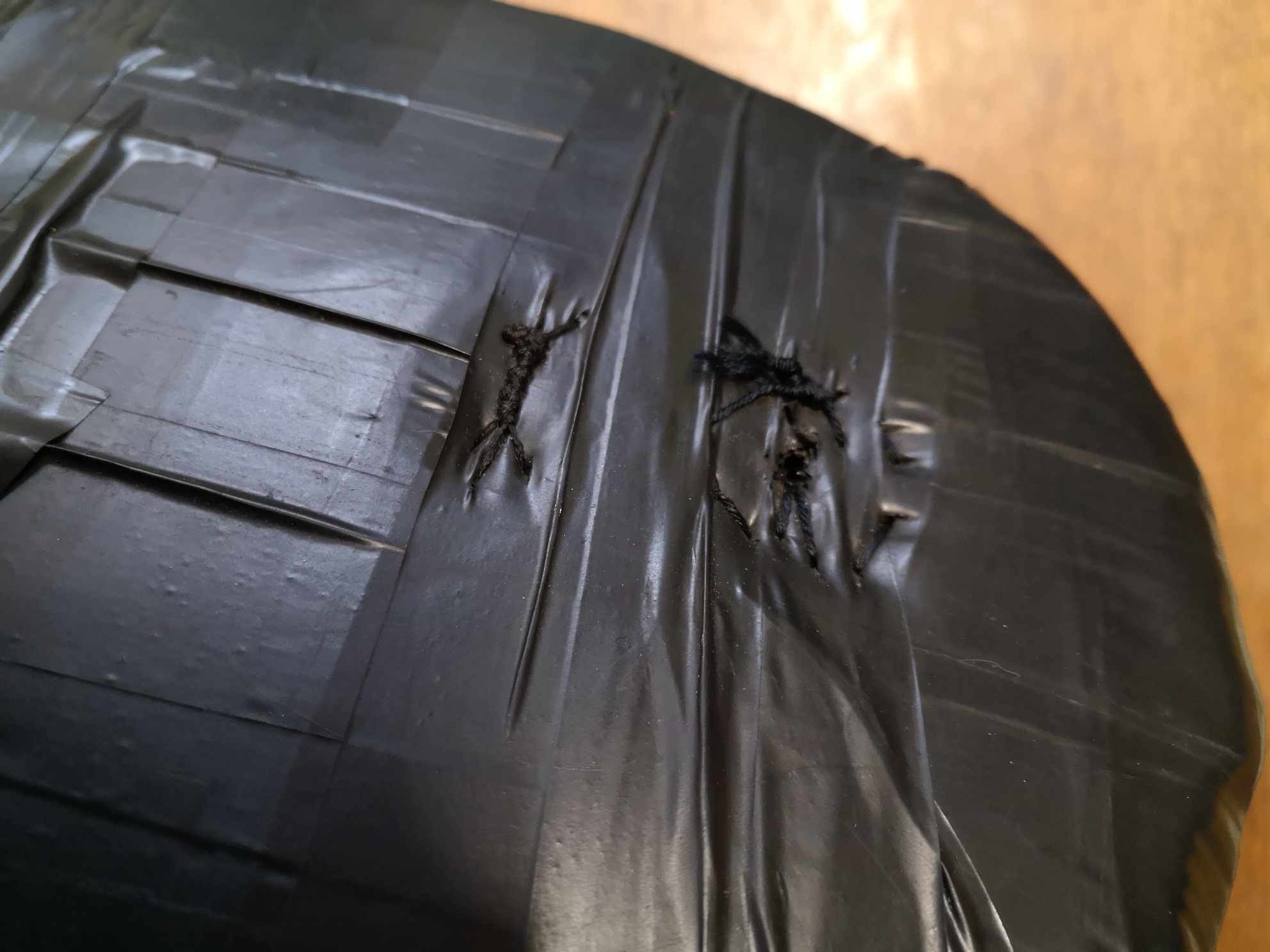
Or you can sew it on using a thick, strong thread. To do this, you need to use a large pointed needle to pierce the foam and the tongue. In this example, I've made 2 seams at 2 different heights to prevent the foam from pivoting and staying in place.
5/ Finishing touches
To make the screw a little more secure for your head, if necessary or if you feel the need, you can tape foam around the head of the screw and the nut.
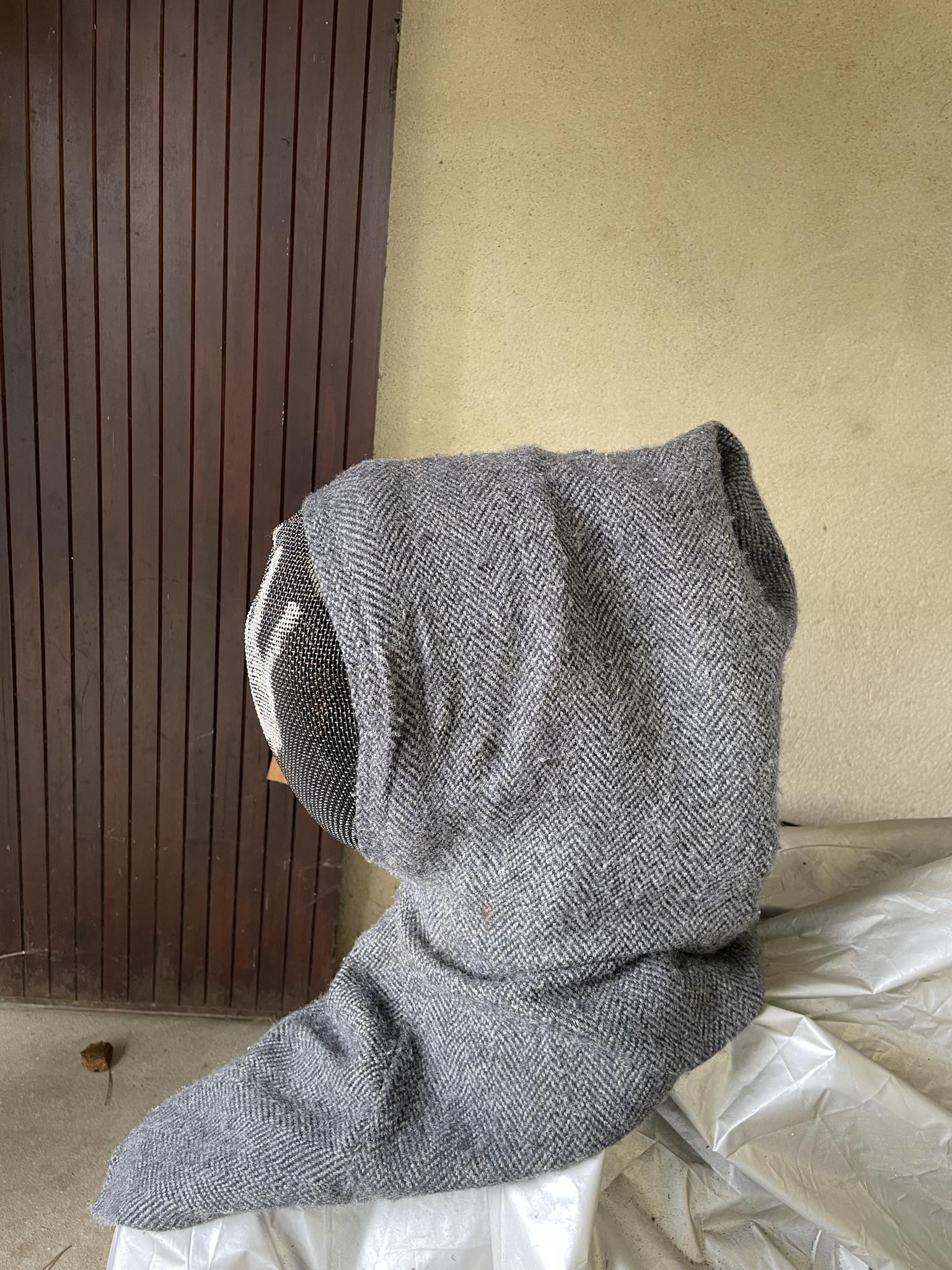
In accordance with our rules, all non-full-face neck protectors must be concealed, and the best way to do this is with a bonnet, as shown here in our example.