Making a heavy spear
Spears with an impressive blade were not a rarity among the Vikings.
Archaeology has provided us with a large number of specimens scattered over a large part of the Viking zone of influence. For more information on this subject, I recommend the excellent study published by Tomáš Vlasatý.The iconography also shows very large spearheads, although in this case it is questionable whether this is a stylistic exaggeration.
Many questions remain unanswered about these weapons, particularly in terms of their handling. More complete work remains to be done in terms of experimentation.
Under the Herja rules, heavy lances must meet a number of criteria:
-the length of the blade must be greater than 40 cm
-head + ballast must weigh at least 600g
-the total length of the lance must not exceed 2m.
This tutorial shows you how to make this type of spear from Black Armoury's spetum:
1/ The part not worked on
The basic simulator is not a Viking spear point. It has 2 rigid lugs and the tip is much too sharp.
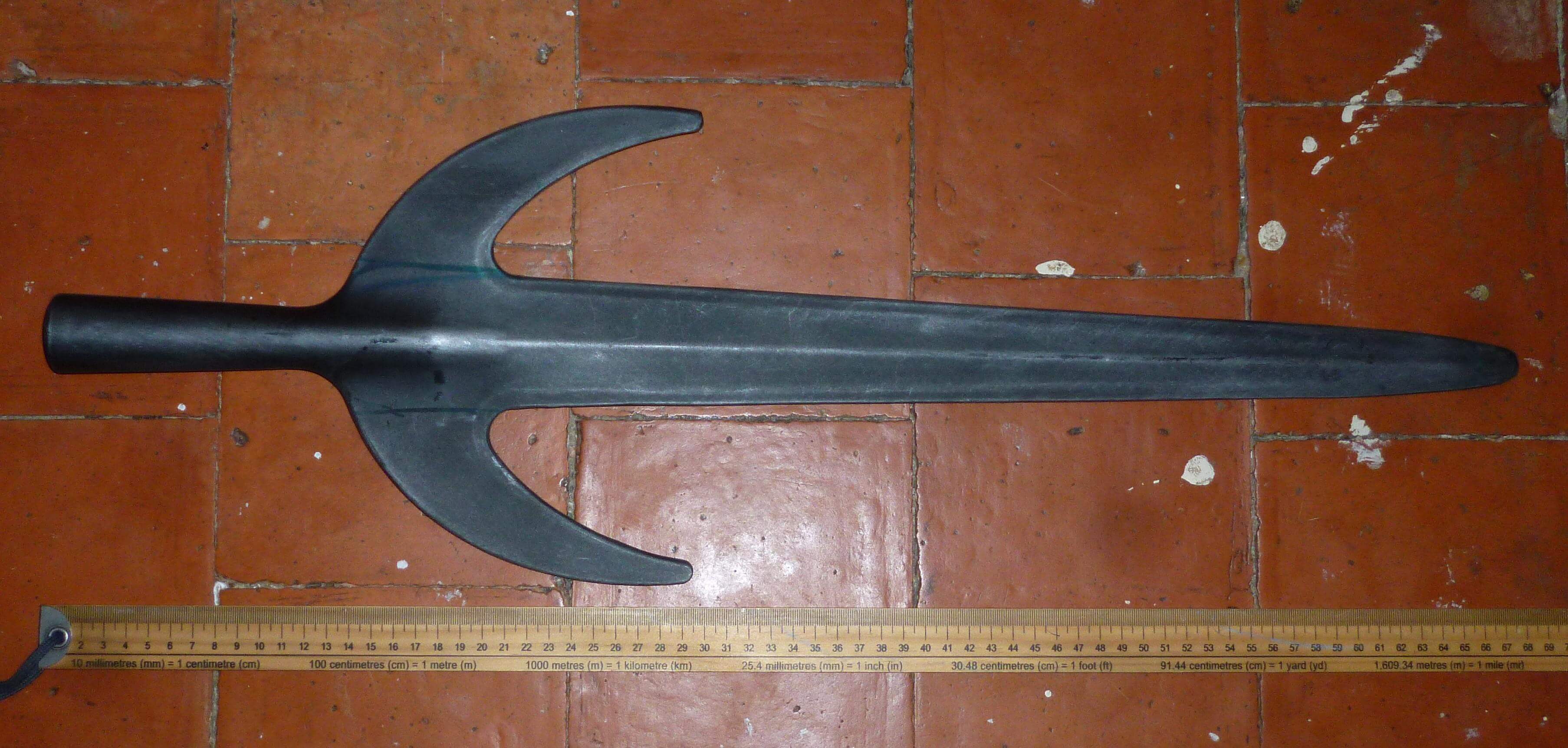
2/ Necessary modifications
The lugs need to be cut to a shape compatible with existing point shapes. There are several possible models. The point must be blunted on the template of a 2€ coin.
The material is very easy to work with, using woodworking tools such as saws or rasps. Finishing should be done with increasingly fine sandpaper to achieve a smooth appearance.
Be careful with power tools! Grinders bite too hard into the material and can melt bits of the simulator. It's better to use elbow grease.
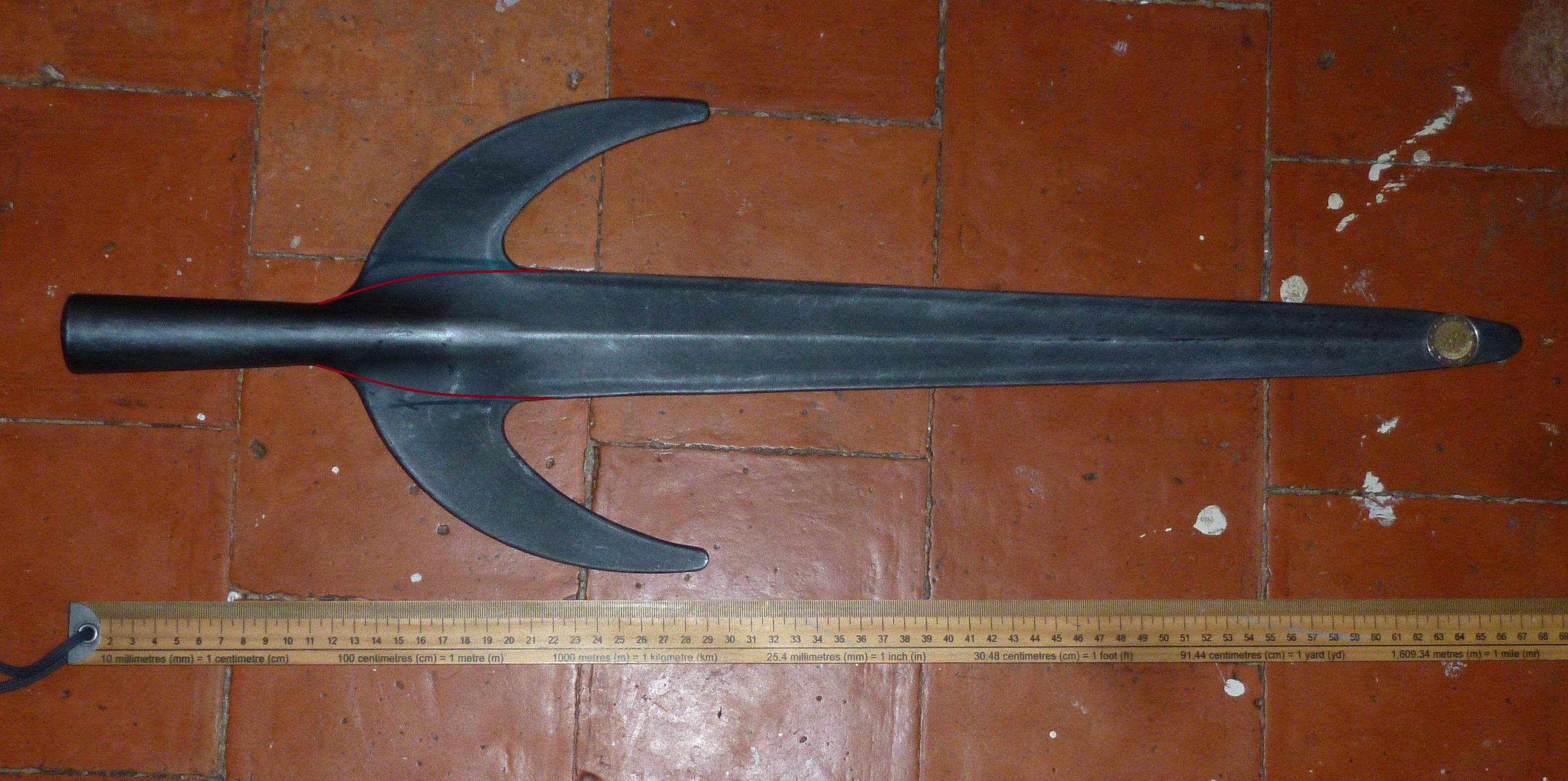
3/ The modified simulator
The shape chosen here is similar to a point, measuring just over 53 cm, found at Brandstrup in Denmark.
The finished tip weighs approximately 300g. It is therefore necessary to add approximately 300g of ballast to its base. (see tutorials for ballasting tips)
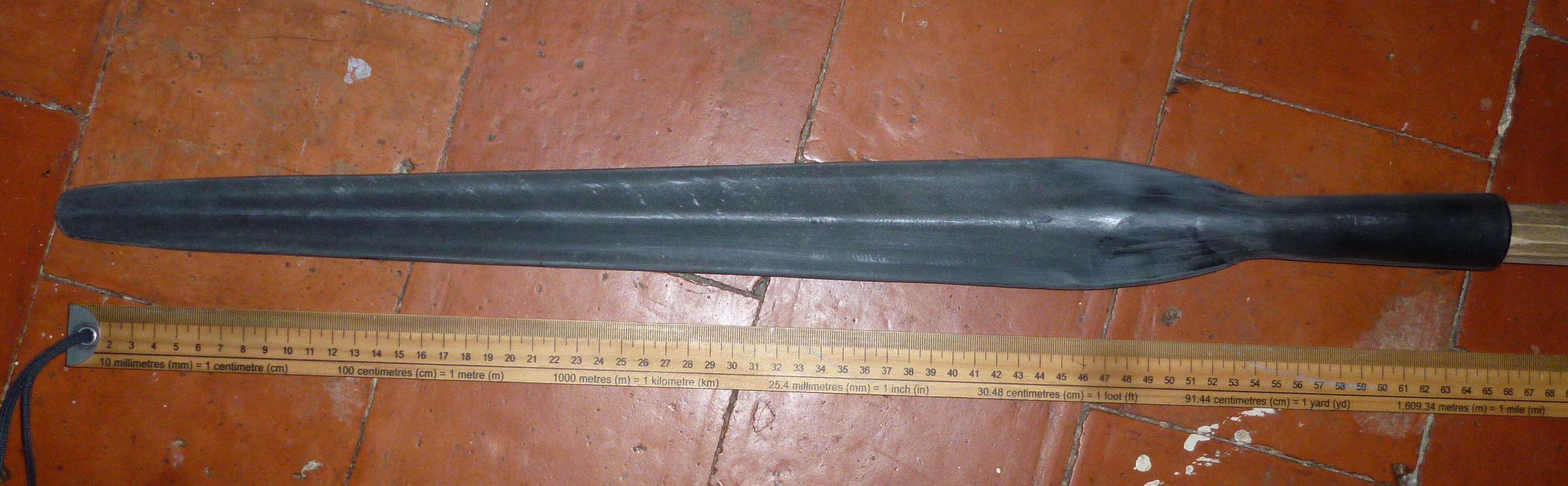

Brandstrup, Pedersen 2014: Pl. 29.3.
4/ Use
The blade is relatively rigid. It is rigid enough not to flip-flop when handled vigorously. On the other hand, the blade bends when a thrust is made and reduces the power of the blow.
In use, the tip proves to be very resistant. After 3 months of weekly use, the tip is in perfect condition.